





The World to Me Was a Secret—Caesious, Zinnober, Celadon, and Virescent
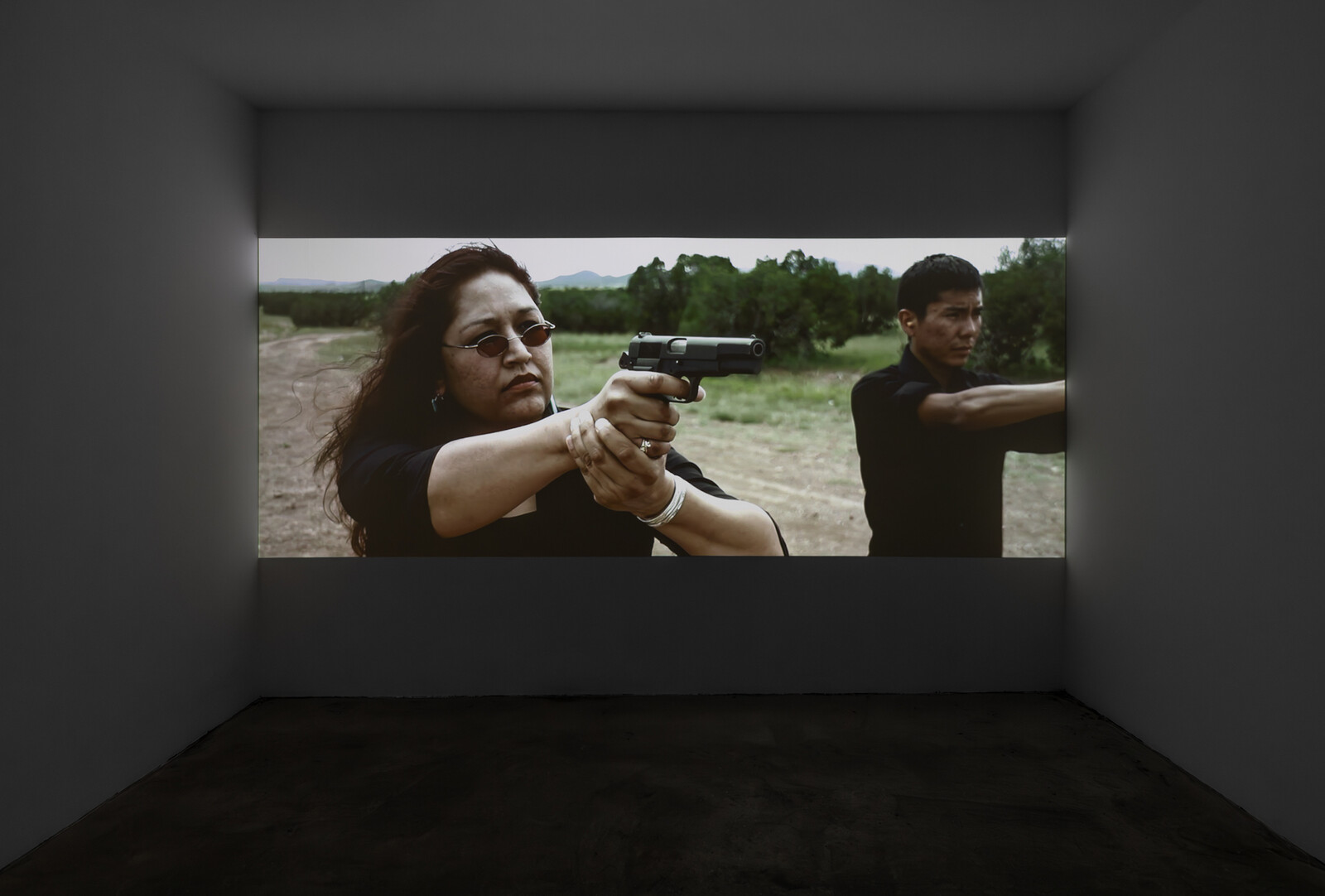
American Ledger No. 1 (Army Blanket) (2020), a graphic history of the United States in the form of an army blanket, is embossed with icons of waves, flames, police whistles, wood-chopping axes, and a fractured city skyline. Chacon’s main interests are all there: notation in the expanded field, the interplay of various mediums, the embeddedness of sound and landscape, and the malleability of map and territory.
I entered by the wrong door, meaning that I saw this chronological survey in reverse order. By the time I came to view the works with which the exhibition is supposed to open—the artist’s earliest paintings, from the 1970s, show sunny scenes of life in de Paula’s home state of Mato Grosso—I was aware of the dark clouds that would gather over his vivid later canvases and Arte Popular-inspired sculptures.
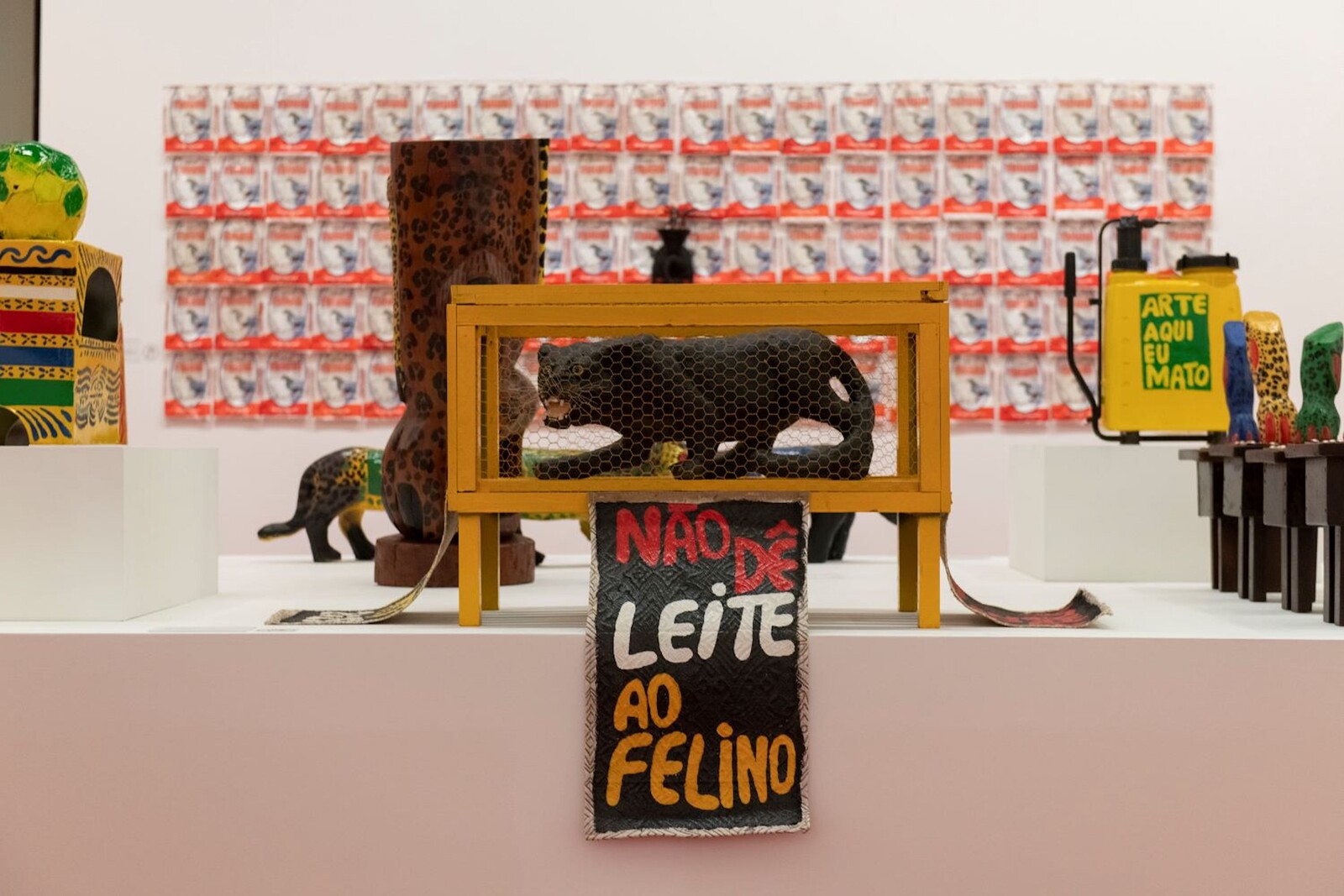
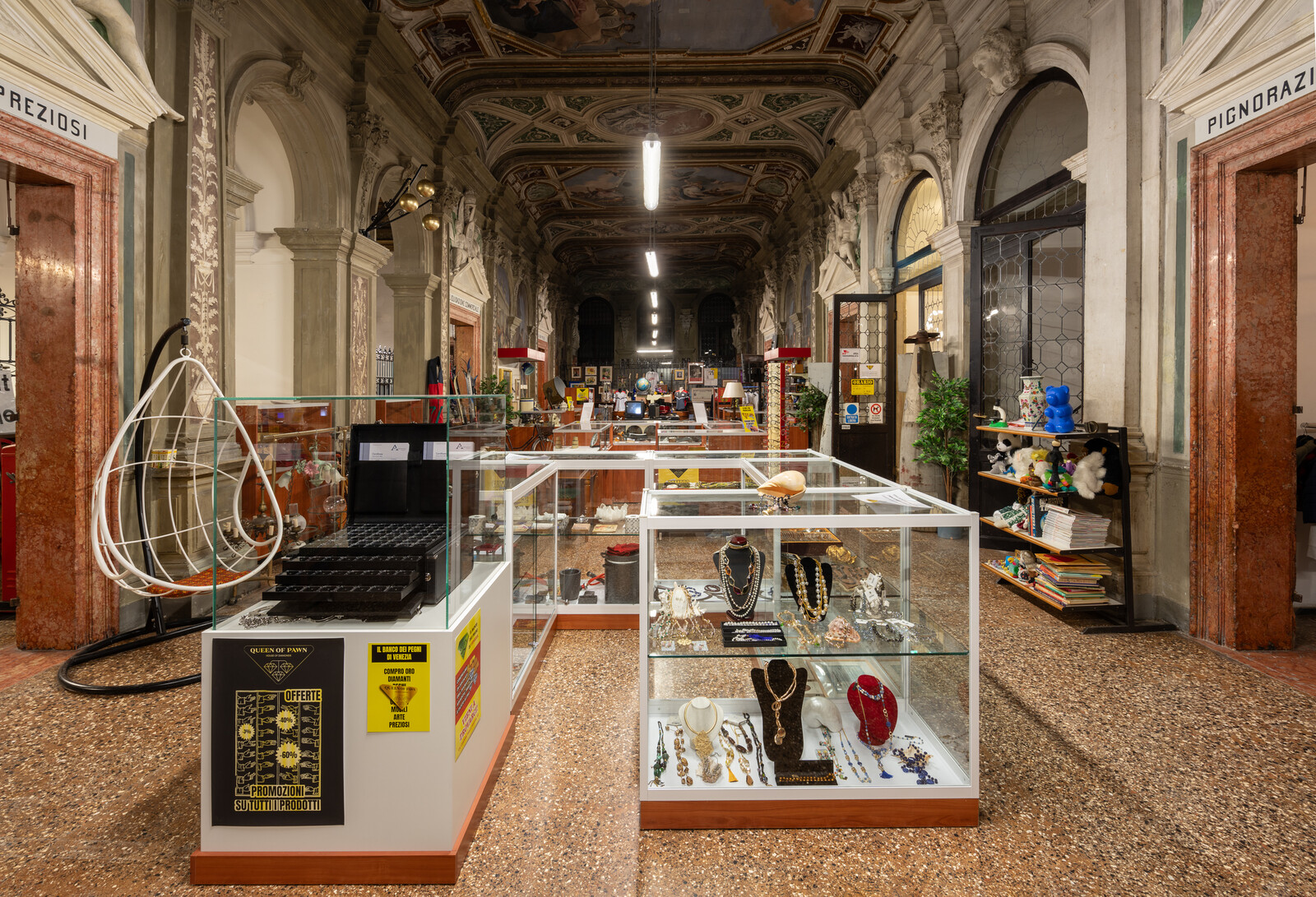
While the adoption of a bilingual sign for the exhibition’s motto suggests that its curator, Adriano Pedrosa, will embrace the creative miscomprehensions that are commensurate with translation, the reality is that everything will be explained to you. The frustration of this exhibition is not that of the exile who, in a strange land, is unable to make sense of their surroundings but rather that of the tourist who is prevented from straying beyond the Potemkin village in which everything has been arranged to illustrate a point.
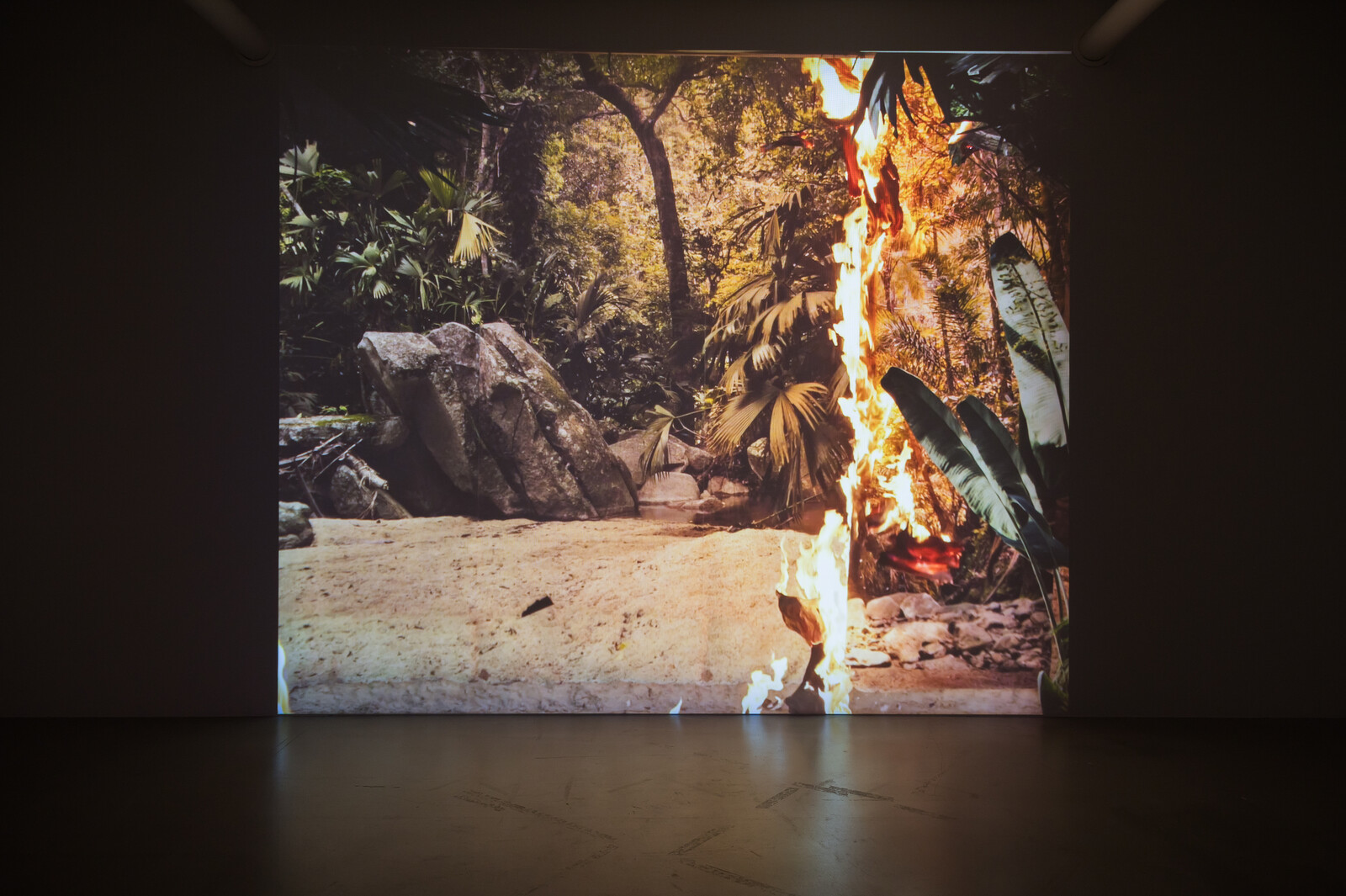
From Grenfell Tower to the clothing factory fires of Gujarat, the wildfires of Sicily to those in California or New South Wales, the great fires of the past decade have all seemed to reveal something about the place that they destroyed. Caused by different circumstances, and burning on distant parts of the planet, what the fires share is this quality of revelation: each one shed light on the slower but relentless systems that made its devastation possible.
Organized by Veronica Roberts, “Day Jobs” gathers some thirty-nine artists working in the United States between World War II and the present day, including some blockbuster stars whose career trajectories were part of their mythologies, like Andy Warhol (commercial illustrator and window display designer for Bonwit Teller) and Jeff Koons (commodities broker, Wall Street).
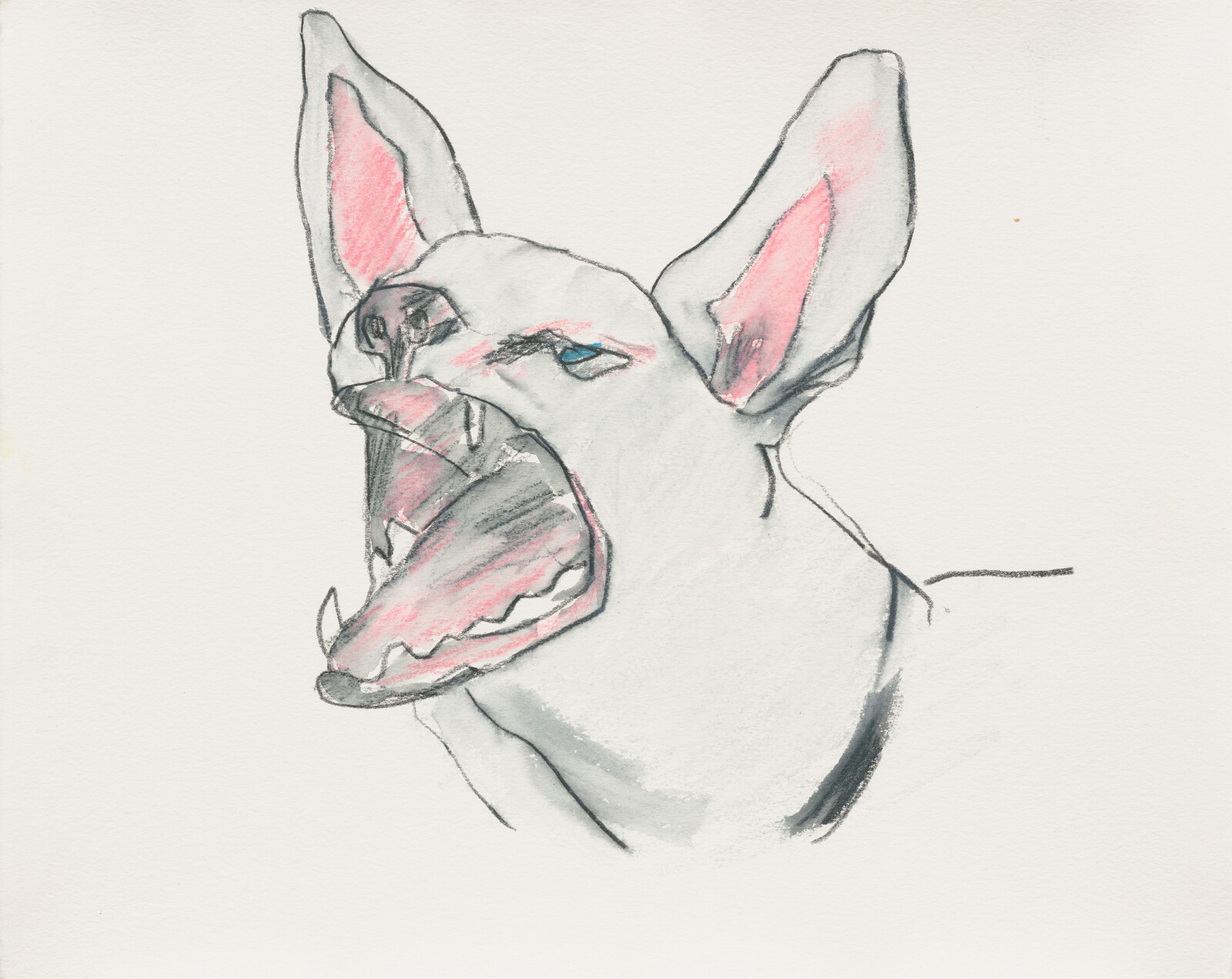
Arranged into families following a meticulous taxonomic logic, the almost 300 drawings presented at Drawing Center reveal the extraordinary bestiary that Joan Jonas has been compiling over five decades. Jonas has a unique capacity to traverse artistic fields, but what is illuminated by this exhibition is how drawing runs through, across, and within every means of her expression.
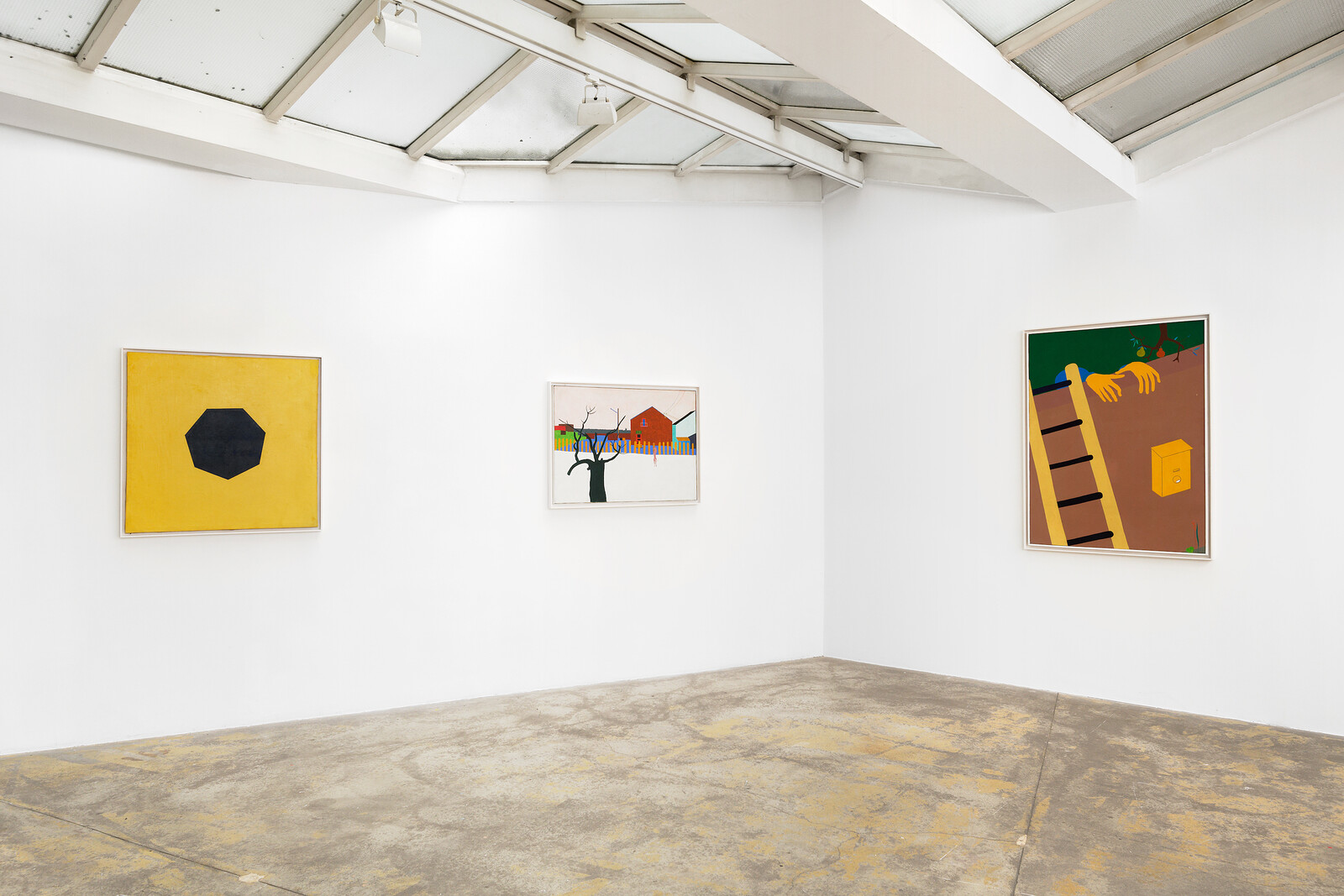
Having survived first the Holocaust and then three years’ conscription in the Red Army, the Jewish-Polish painter Emanuel Proweller later said of his identity that it felt like “a jacket with a reversible lining.” The same analogy might be applied to Proweller’s paintings which, though unmistakably his own, routinely dress up in the various styles the artist encountered after moving to Paris at the end of the 1940s.
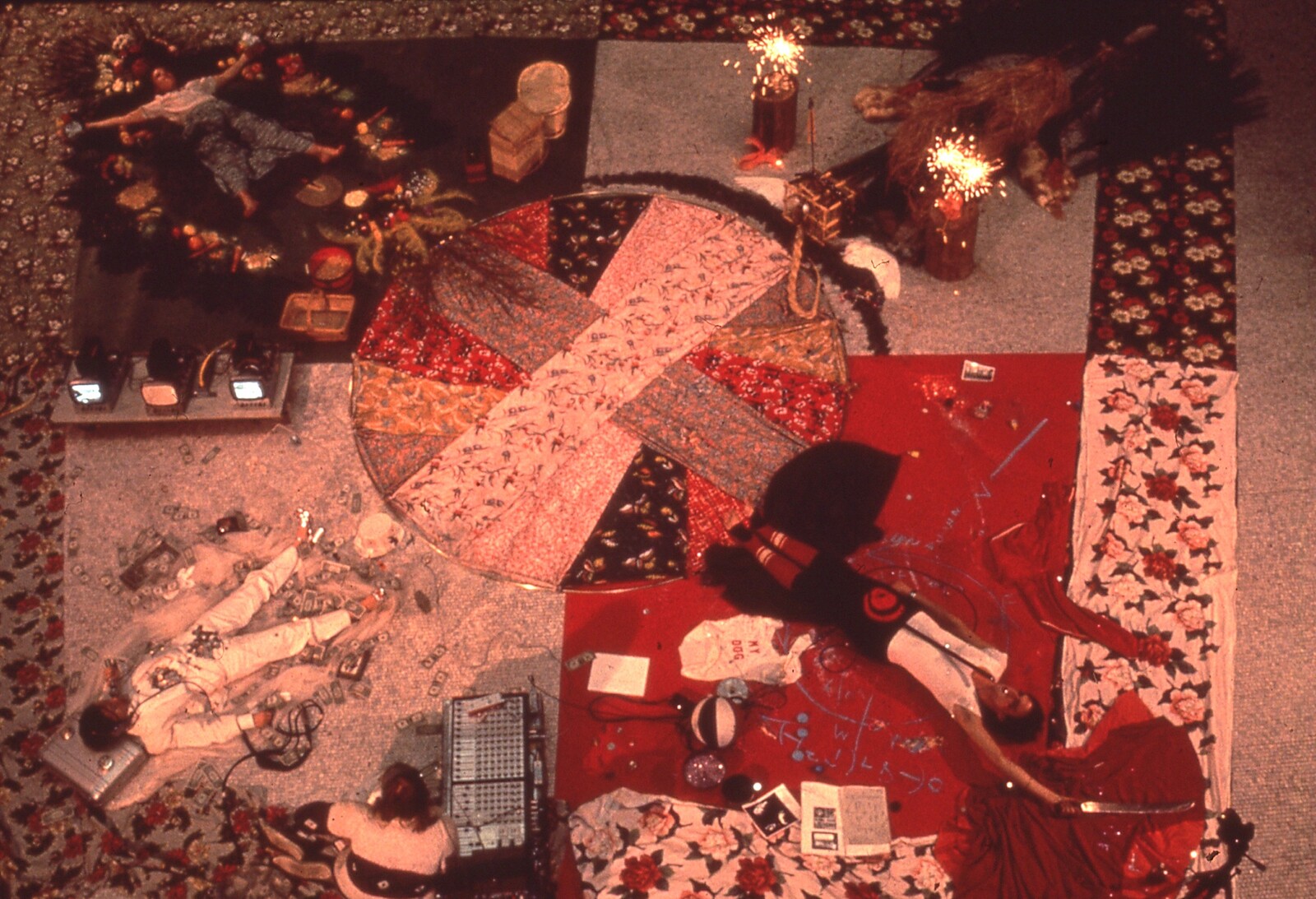
Girouard’s difficult-to-classify performance work—she remains best known for her collaboration with Carol Goodden and Gordon Matta-Clark on the restaurant-cum-happening FOOD—transpired primarily in downtown New York in the 1970s, and until recently almost none of it trickled down to the Bayou, an unfortunate fact given how prominently the region figured in her own artistic mythology.
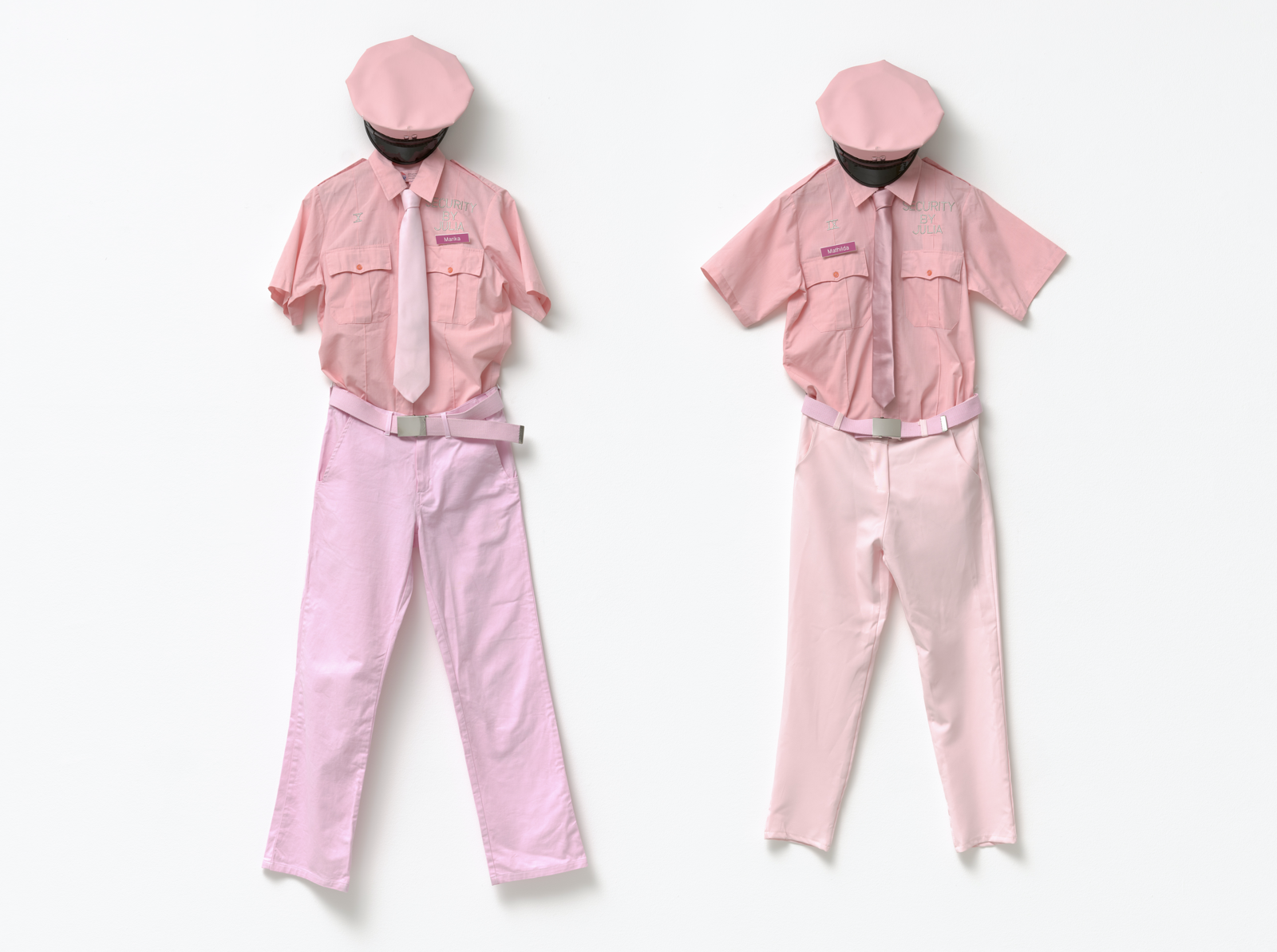
The critique in London-based artist Eva Gold’s first US solo exhibition is spare and subtle. Consisting of six works on paper and two sculptural installations, the show conveys, in meticulous details and material choices, a message about the coercive economic power embedded in everyday cultural transactions.


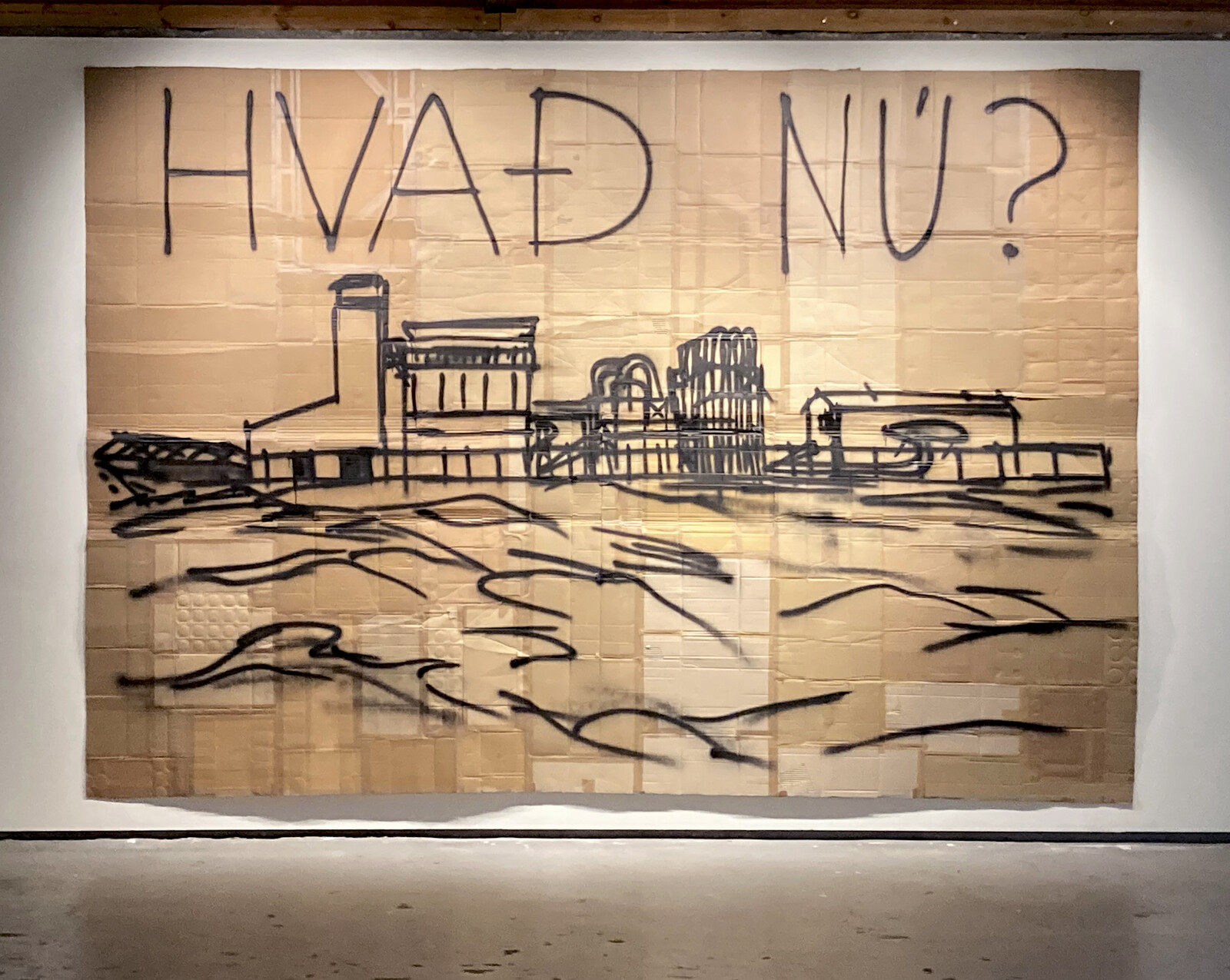
Deconstruction of Heavy Industry in Helguvík


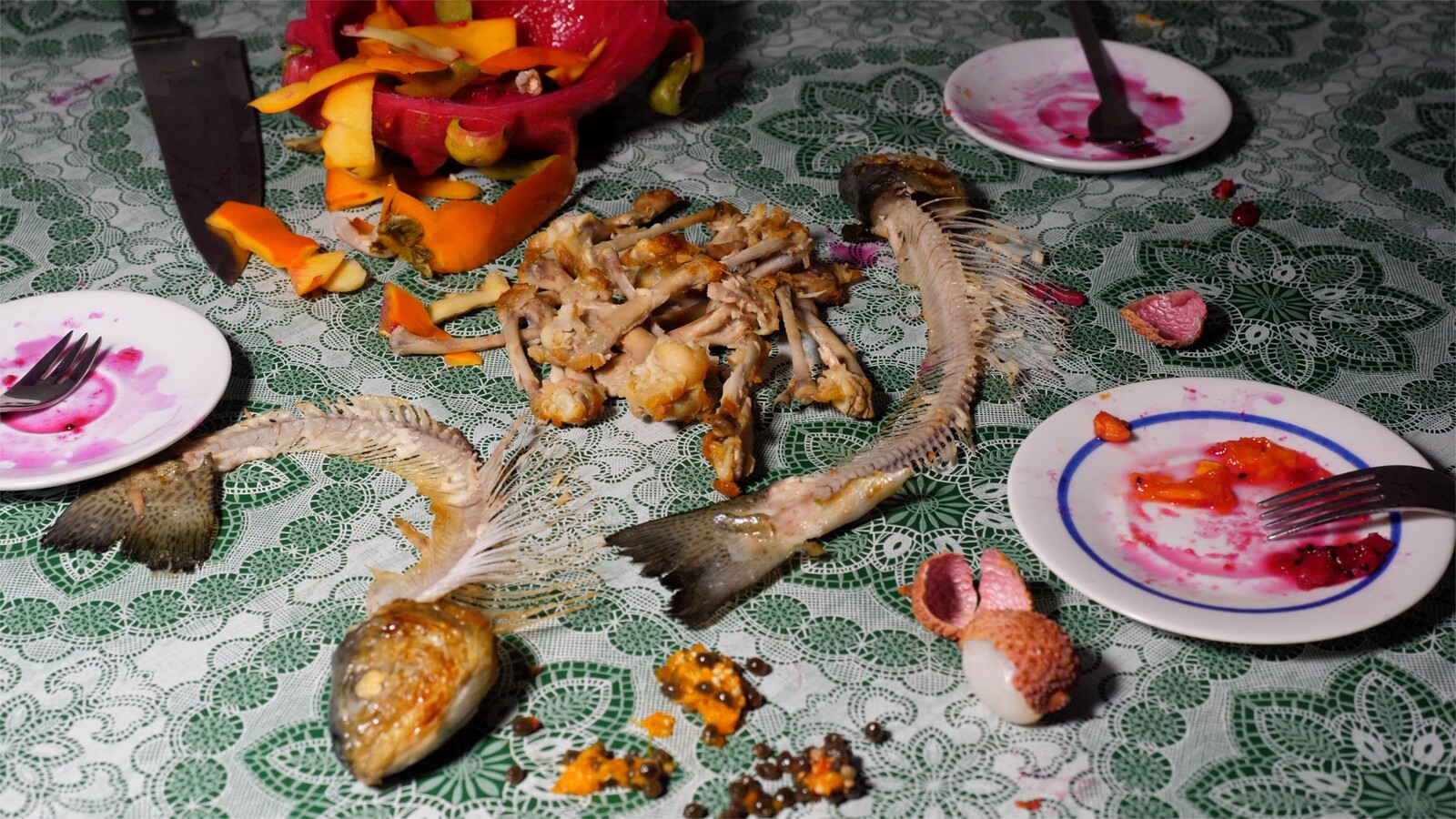



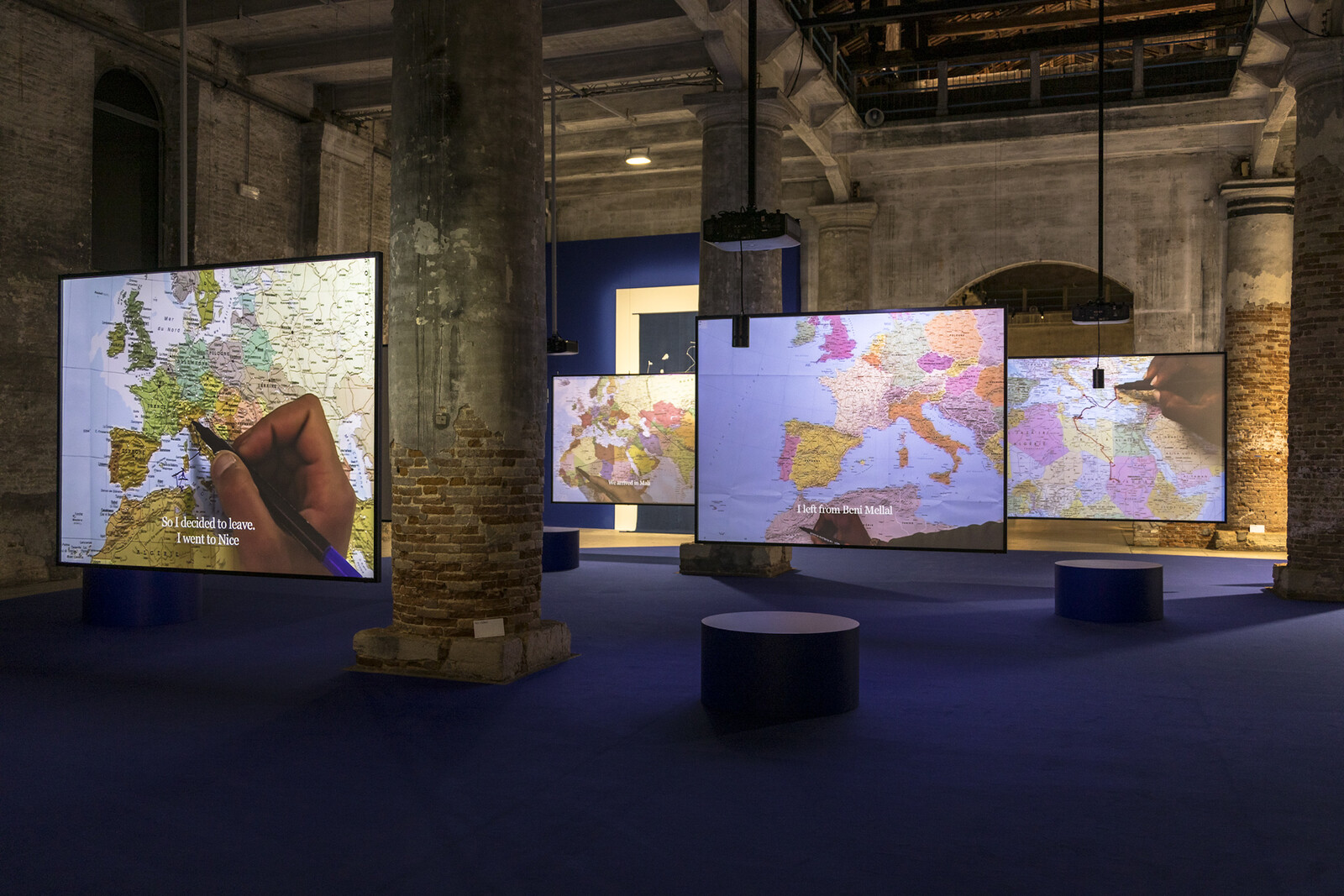
STAGING THE PLANETARY INTERREGNUM


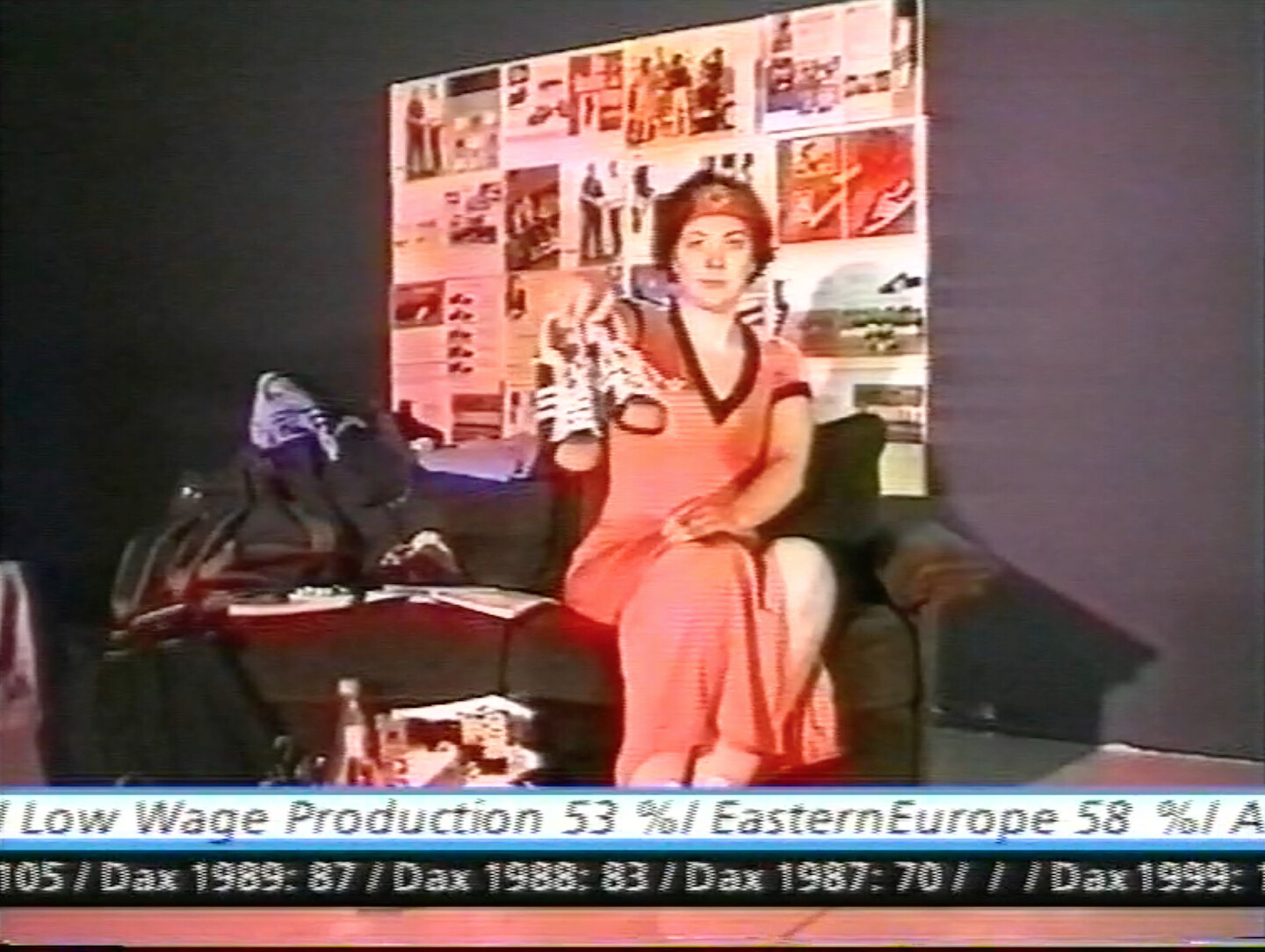

It is an honor to be nominated for the DAAD Artist residency, organized by the German Academic Exchange Service of which you are the director. Unfortunately, I must reject this nomination for several reasons.








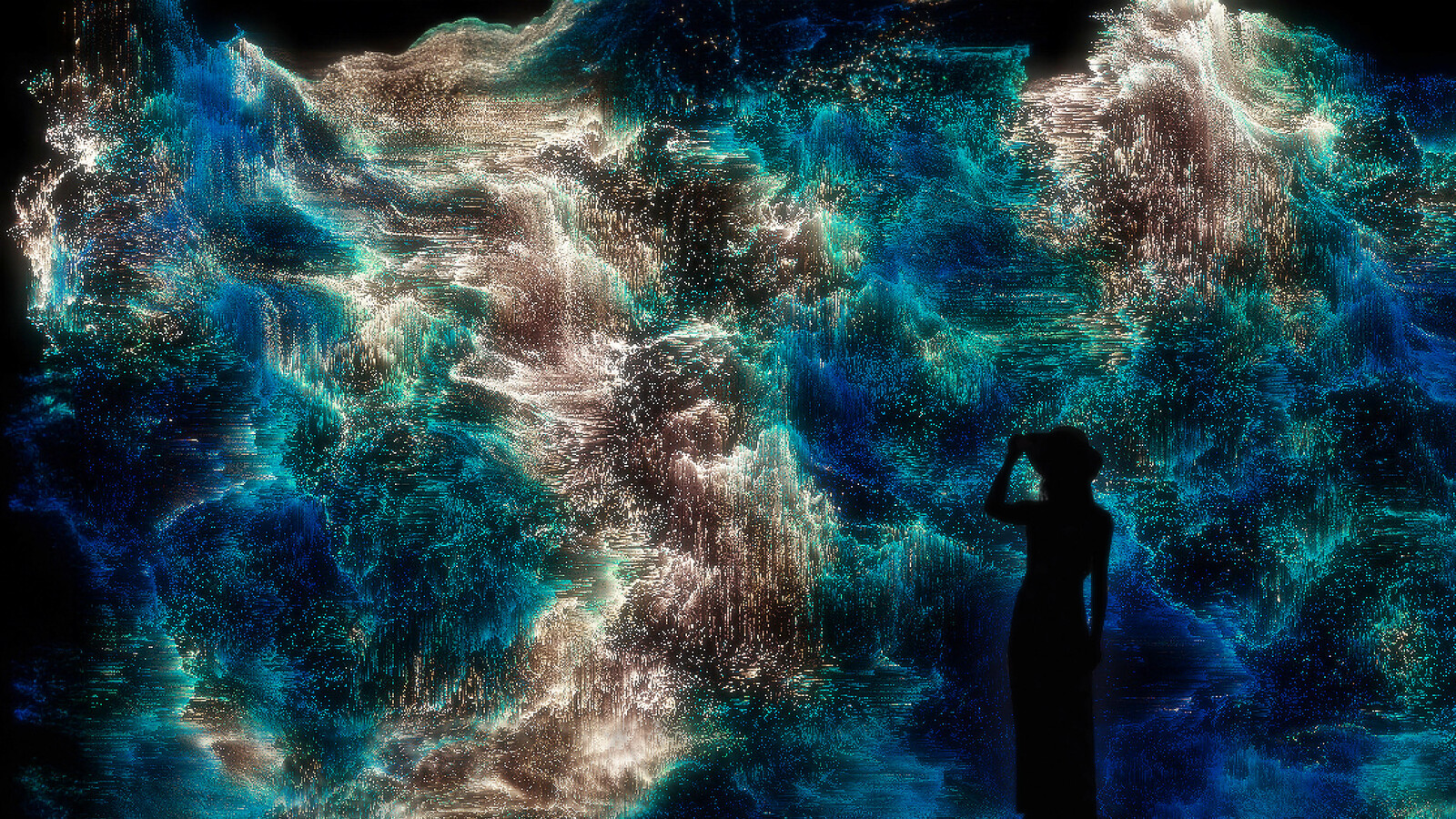
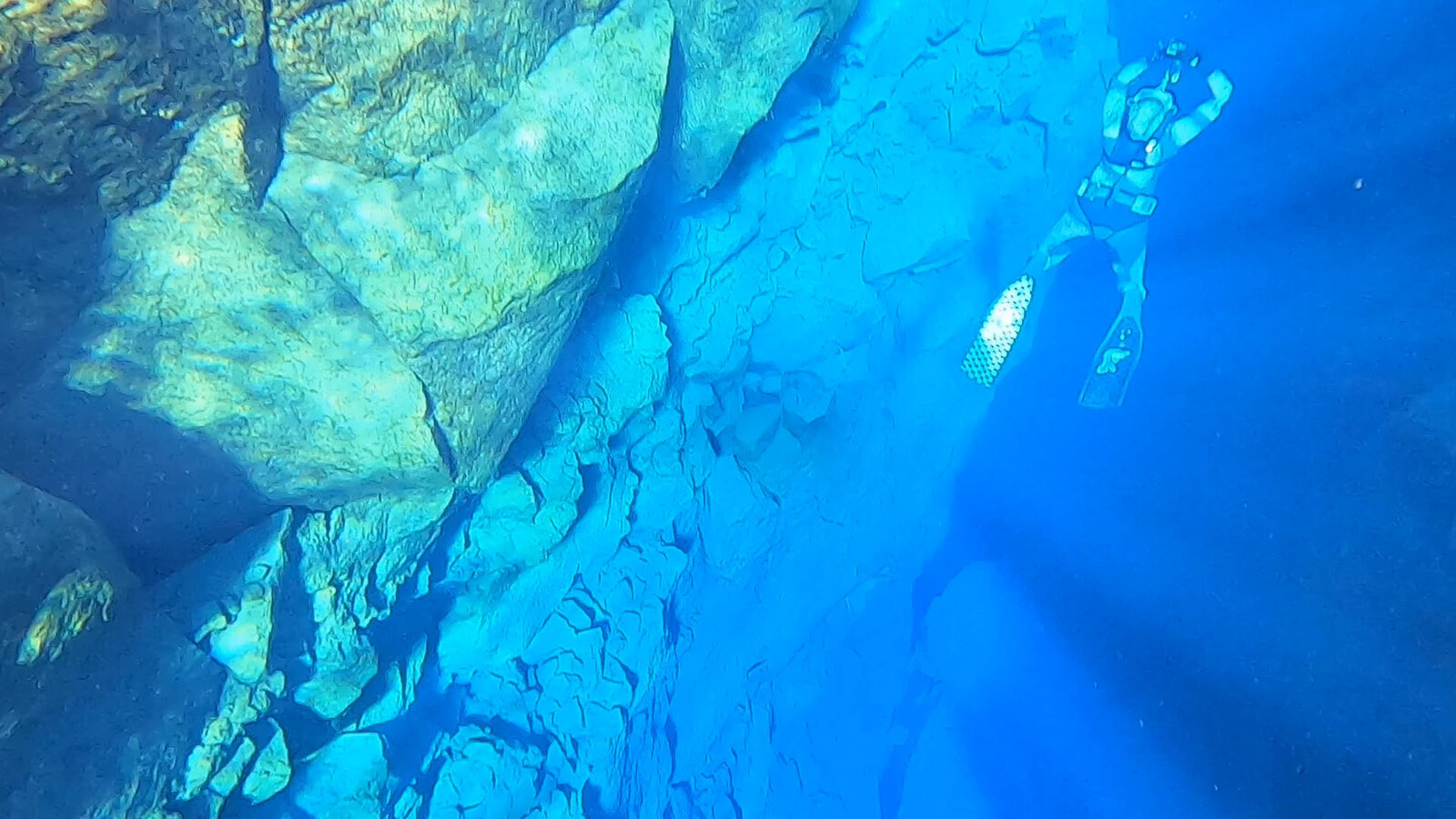
We Are Extraterrestrial


The history of avant-garde museology begins after the October Revolution, when the Russian champions of new art proposed the establishment of a network of Museums of Artistic Culture. Not much later, a group of New-York-based modernists and Dadaists started the Société Anonyme, a collective that sought to establish the first American museum of modern art. The successive chapters of this story were written by the Russian Constructivist El Lissitzky, who designed the Kabinett der Abstrakten at the Hanover Provinzialmuseum, and by the avant-garde a.r. group, whose efforts began the International Collection of Modern Art at the Łódź museum now known as the Muzeum Sztuki.